Broken Windows policing: what it is and what it is not
The Broken Windows theory was fundamentally misunderstood and still is today.” — John Miller
There’s a lot of talk about Broken Windows and crime prevention, both good and bad. And the concept features heavily in my book, Back from the Brink. But what does Broken Windows mean? How is it put into practice? How did it help reduce violence? What about the collateral damage? Even within the NYPD, different people have different ideas. But what one sees is a through-line going through these different perspectives.
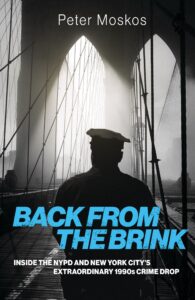
I put John Miller first because it is a most excellent summary of what is to follow from the likes of Commissioner Bill Bratton, Jack Maple (Bratton’s right-hand man), and Professor George Kelling (and many others). Interestingly, George Kelling, the inventor of Broken Windows, and Jack Maple, the most famous cop who used it, never really got along. Maple dismissed non-cops with bright ideas as, “George Kelling types, on this gravy train.” George, ever polite, never brought up Jack. At least not to me. Kelling’s insight on Broken Windows is interesting because he authored Broken Windows and also expressed serious concerns about its overuse.
I just re-listened to these parts from my interviews. The Jack Maple interviews were conducted by Chris Mitchell in 1996 and 1997 for the Maple and Mitchell book: The Crime Fighter. My entire source for all Jack Maple material is from the tapes that Mitchell graciously gave me to use. I’m also pleased I’ve since been able to pass them on to his wife and children. The part below isn’t even my book. So much I had to leave on the cutting-room floor
John Miller, Journalist and NYPD Deputy Commissioner for Public Information
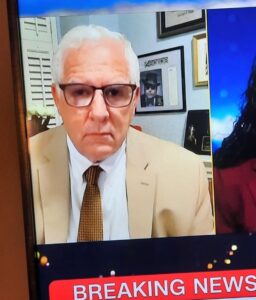
The Broken Windows theory was fundamentally misunderstood and still is today. Kelling and Wilson’s theory was missing a piece. People like Rudy Giuliani will say out loud things like “Broken Windows is if you take care of the little things, the big things will take care of themselves.” The fuck they will! It is about more than removing the things that made people feel unsafe: the appearance of pervasive disorder, garbage in the street, abandoned vehicles, people urinating, drinking, doing drugs, graffiti, all of that. You could make all of that go away, and the violent predators are still going to be out there shooting and killing people.
Community policing was the mantra of Dr. Lee P. Brown, who was Dinkins’s first police commissioner. It was a popular theory and elegantly designed in that these cops would have beats, and they would have supervisors that supervised multiple beats, and they would go out and make contacts among the community members and the business people, and they would become problem solvers. The fundamental misunderstanding of community policing, which is largely based off kind of a Broken Windows theory, is that it didn’t apply in a war zone!
You cannot send the Red Cross onto the field of battle before the infantry. This is a city with 2,245 murders, 5,000 shootings, and 100,000 robberies. You’re going to draw the community out into the battle as participants because you, as the armed people with guns and badges and authority to solve that problem, had failed? This idea was based on zero logic and had an equal chance of success. Community policing has a place. It just wasn’t the time. The time was to take the ground back.
The core of Jack Maple’s thinking was the people who are doing the little things are going to be highly likely to be doing the big things. Was this an epiphany? No. This was the definition of his Transit strategy: if you want to end robbery, start with fare evasion.
But you can use the Broken Windows theory. Stopping a guy for drinking beer gave you a chance to run him for a warrant. Is he wanted for a violent crime? Stopping a guy for pissing in the street gave you a chance to issue a summons. Which meant if he couldn’t produce ID you could bring him into the station, run his prints, and then find out he was wanted for one of last week’s shootings.
While Bratton embraced Broken Windows, Jack was the one who figured out how to use it, and they did not disagree with each other about this. You are going to reduce crime by targeting and going after the violent predators, the groups dealing drugs on the street corners, and not the broken window.
Jack Maple, NYPD Deputy Commissioner
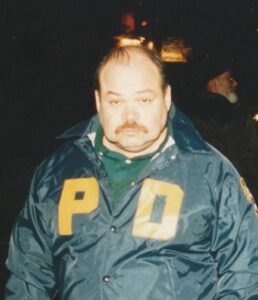
In the early ’70s. You got the bad guys on the corner. They’re drinking. We know they have drugs on them. Okay. And we also know they don’t have I.D. on them. Let’s bust their balls. Say, “Gee, we’re gonna give you a ticket ’cause you’re drinking here.” And, “Oh, you’re littering. Oh, you don’t have any I.D.? Oh, that’s too bad.”
We have to now detain you, until we can find out who you are. When we have to detain you, we have to search you. “Oh, look what we have here!” You have a gun on you, you have [unintelligible] on you. Look at this. You’ve got somebody else’s ID on you! “You don’t look like you’re Edith Kaufman. Is that you? Did Edith give you her credit card?”
It’s not that those activities all the sudden are making people go out and do home invasions. The off-duty crooks, they hang out drinking, too. The home invaders are fucking off duty, hanging on the corner. And we knew this as a cop.
The correlation is that bad guys are also disorderly, not that the disorder is going to…. not that the drinking on the corner is not going to make… Look, when they’re drinking at the break at Carnegie Hall, they don’t all of a sudden run out with their tuxedos and snatch chains down the avenue! People drink all over the streets of the French Quarter. They’re not the ones doing the robberies. They’re the vics. But they’re not doing the robberies.
So in precincts below the poverty line, you have a greater propensity. But the vast majority of folks that live there are good. However, the vast majority of crooks also live there. The vast majority of the parolees live in the most depressed areas.
But the people who are occasionally disorderly in any one of those areas have to be able to get the summons, or after they’re arrested, released. Depending on what it is. And that’s the way that they all have to be designed. All of these strategies have to be designed to put the persistent offender in jail. The predatory criminal in jail, the persistent felony offender in jail, and misdemeanors in jail. The strategies have to be enforced evenly for all.
If you only have quality-of-life enforcement, you will be living in a fool’s paradise. You will think everything is okay, if it’s not reported, and you’re still going to get hold-ups And then you’ll be fucking yoked. Then it will be over.
The study in Newark shows that the crime wasn’t down when they were doing this stuff. For the quality-of-life strategy, you need the warrants, you need the detective follow-up. The other thing is that the panhandlers or bums? In bad neighborhoods, they get set on fire. We’ve all seen that. There’s no beggars in bad hoods.
There isn’t one strategy. Just quality of life — without the warrants, without the debriefing, just the straight quality of life stuff and the bums — that is like giving a facelift to a cancer patient.
So that’s before it was Broken Windows, it was busting balls. It was busting balls with the follow-up on it. The Busting Balls Theory. We don’t want to fix the windows on a house that’s falling down.
There’s always been people hanging out in the same spot. There’s always been drag racing. There’s been open-air prostitution. The difference is that it’s more pronounced in poorer neighborhoods. Because people don’t have money to hang out in bars, number one, all right? The over-21. So they’ve got to drink somewhere. No one strategy could stand alone.
Just like the warrant enforcement strategy can’t stand alone, because you still need the guys out there hunting down the predators in the act and catching them. The narcotics strategy doesn’t stand alone, because you’re not getting the home invaders with that. You got to do the detective follow-up and the whole thing. So it’s got to be integrated and it’s got to be relentless. But the main theme on it is, especially with the quality of life, is that the good people who are, listen, we’ve all taken a leak at one time or another in the park or whatever, that they get a ticket, they’re not going away forever.
But there is no doubt in my mind that the Broken Air Conditioner theory would save more lives in more cities in America than any one strategy!
George Kelling, professor and co-author of “Broken Windows”

Bratton was able to inspire. Given Bratton’s toughness on serious crime, he was able to inspire a lot of cooperation when it came to disorder as well. And then that finding in the subway that in some neighborhoods, one out of ten fair beaters was either a serious criminal or carrying an illegal weapon. And that opened Pandora’s box about, I think, the overuse of broken windows as a way to identify targets.
[Moskos: As in casting a wide net?]
Yeah yeah. It seems to me that it was done right [in that] Bratton gave the officers a vision. The training that we provide doesn’t give cops a vision. I’ve always wondered why people like Bratton and Flynn etcetera haven’t taken on the police academies because, I think as you know, they’re very uninspiring to say the least.
[Moskos: Do you think Giuliani ever really understood broken windows?]
I think he did at the beginning, but I think he saw it quite opportunistically later on. You know you can only push a tactic so far, and I think he started pushing it too far, not while Bratton was there. They really tussled for control. And now we get to the part that I think is most important about my conversation with you because I can’t answer the question of why did crime drop in New York City. Well, I have my own theory. It’s a combination of Compstat and Broken Windows and Bratton’s very wise use of well-trained, disciplined special units to get guns. And so guns stopped being carried and we got the results that we did in New York.
We got off to a good start. We had a lot of good victories. We got the high moral ground because the demonstrators—the subway was supposedly, in their mind, a surrogate shelter—were talking people out of buses, back into the subway. But it was falling apart because I wasn’t getting any leadership. The work itself was discouraging for officers. The vagrants would break rules and be ejected, only to reappear a few minutes later. The police union opposed the operation, on the grounds that the police should concentrate on serious crime. The media representation of our efforts was generally fair, but there were other stumbling blocks. The advocates hit us hard, especially on the talk shows, accusing the MTA of heartlessness and racism and the cops of brutality. The advocates make lofty claims for the rights of their clients. The truth is, the vagrants want to live without rules. And the advocates want the homeless to be in the subways and highly visible to the public, so as to make a political statement.
Wasserman, Kiley, and I met, and Bob Wasserman suggested Bill Bratton. I know Bratton a little bit at this time. He’s out of Boston. Kiley was a little bit skeptical: “A chief of a department of 400 is supposed to take over the Transit Police in New York City?” But Kiley was finally convinced. And although there was resistance from the president because there had been a sequence at that time based on seniority, ultimately he appointed Bratton. We know what happened in a matter of months.
Bratton immediately provided leadership. He promoted people who supported me. In the spring of 1990, Operation Enforcement went out of business, but only because Bratton, a staunch Broken Windows man, incorporated the goals and methods of the operation into the regular procedures of the Transit Police.
Bratton established three top priorities for his officers: Stop the subway robberies, control farebeating, and restore order to the subway. And of course, that was the beginning of what happened in New York City. Bratton took over like General MacArthur in the streets of Tokyo.
Bill Bratton, NYPD Commissioner
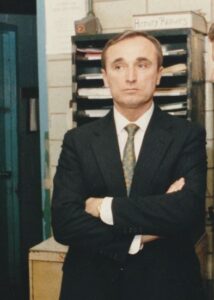
One of the reasons George Kelling and I got along so well is he’s the academic researcher who gets out on the street and sees for himself what those community people are seeing and telling the police about. I was the cop who was practicing it.
In the ’80s we were losing, and losing big time. In city after city, crime kept going up every year. One of the reasons was the focus was almost entirely on major crime. Police departments were shrinking, and this is where the Broken Windows argument became so critical, the linkage between disorder and serious crime.
So when the “Broken Windows” article came out in 1982, the synergy was perfect. I focused from my earliest days on broken windows, because when I went into the communities, I heard people complaining about broken windows. Even in the most crime-ridden neighborhoods—they used to complain about crime, certainly—but what I came to understand was that every day people were seeing this crazy city, what a mess that was.
Both Kelling and I were very frustrated at even the use of the term “zero tolerance.” That’s the wrong term. When the department started measuring ‘stop, question, and frisk’ in Compstat, it was all over. Because then precinct commanders understood what they were going to be held accountable for. So those numbers started going.
The problem is, zero tolerance creates a form of zealotry, so it’s a term that shouldn’t be used, particularly as it relates to policing, because it just imparts the wrong message. Today those that tend to use the term zero tolerance want to do away with quality-of-life policing, because they’re representing that the impact is disproportionate on minorities. So it’s effectively become kind of a cudgel to beat back against police. I don’t use the term “zero tolerance” for anything, other than corruption.
The great frustration I have is the misinterpretation of Broken Windows and quality-of-life crime. The mass incarceration that they criticize so much was the result of a 1988 piece of legislation in Congress, and it was fully endorsed by minority politicians at that time, because they felt that was the only way to stop crime. The arrest surge that so many of the current politicians complain about—the incarceration of young black and brown people—that was actually more in the ’80s under Benjamin Ward and David Dinkins. This predated Giuliani and my coming to New York. Or current critics blame Clinton and Biden’s 1994 Crime Bill, but that was one of the best things that ever happened to the criminal justice system in America. We had money for research. We had 100,000 more cops. For ten years we had the ban on assault weapons.
Police are going to have to use force, we’re authorized to use it. So the key is always going to be the police leader’s ability to look at his or her patient, the city, look at the resources they have to work with, the capabilities of his department, and decide how much medicine and how to apply that medicine. It still comes down to leadership. The more this is understood, the better off we’ll be, because the stuff is not rocket science. It is basic Leadership 101.
That’s why Broken Windows is so critical, the idea of stopping crime when it’s minor, before people have to go to jail for committing a major crime. I’ve never had a year as a police chief in all my departments where crime did not go down. If you were to do away with quality-of-life policing in the city—take away the criminal sanction, the legal authority that allows a police officer to make an arrest when persuasion fails—the city would look like 1990 all over again very quickly.
Joanne Jaffe, Three-Star NYPD chief
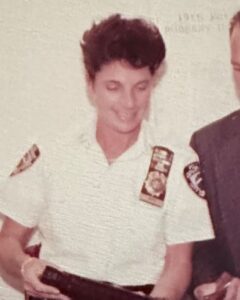
Around then [1994] is when I started hearing about Broken Windows, addressing problems head-on, not just band-aiding issues, not letting problems get bigger and bigger. Address it before it metastasizes and takes over.
[But] this philosophy of Compstat is what really changed the direction of the ship. Many people thought of Compstat as a session or an event, but it’s a philosophy. It was a sea change. The philosophical shift was about holding commanders accountable and letting them take ownership of their command.
Louis Anemone, NYPD Chief of Department
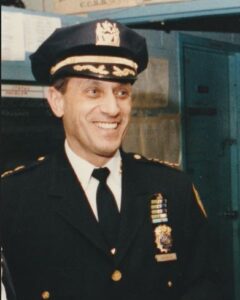
This is Broken Windows theory. Find out who he is, write him a ticket if you can, and if he can’t identify himself because he doesn’t have government-approved photo ID, then certainly bring him into the station house and establish his identity. And, by the way, toss him before you put him in the car. Because we don’t want you or your partner to be assaulted. And if you find contraband or guns or something, well, now he’s not getting a ticket, now he’s going downtown. Broken-windows enforcement is another little tool on the officer’s belt along with his Taser and his weapon and his asp or his baton or his handcuffs.
Whether it was the Seven-Seven precinct in Brooklyn or the Three-Two in Harlem. There wasn’t a cop that worked in those precincts that doesn’t know the worst corners and who were the bad guys. “Oh, yeah, Johnny Fresh. He runs the crew at 140th and 8th.”
Oh, okay. So you’d get into this problem-solving discussion at a Compstat or privately. So, Johnny Fresh, is he selling drugs twenty-four hours a day?
“Naw, sometimes he’s not.”
Well, what’s he doing when he’s not doing that?
“They hang on a corner.”
Uh-huh. So what do they do when it’s a hot July or August day or night? Do they sometimes throw craps on a corner? Do they drink a beer? Or two? Do they pee in the street?
“Yeah, yeah, yeah. Sometimes they do those things.”
So why aren’t we picking the time and place to go after Johnny Fresh, rather than waiting and reacting and letting them pick the time and place when they’re going to do their dirt? Stop them, and question them, and ask them about the peeing in the street, or the drinking of the beer, or the shooting of the craps. And if the answers aren’t acceptable, then certainly enforce the law.
The Seven-Seven Precinct in Brooklyn had a string of shootings by perpetrators on bicycles in a discrete two-block section of Nostrand Avenue a couple of blocks north of Eastern Parkway. So we’re discussing this at Compstat.
“I’m going to do a checkpoint, Chief. That’s my solution to this.”
Checkpoint? I said, What’s a checkpoint going to do for this?
I’m thinking cars. He says, “No, no, a bicycle checkpoint. It’s a quality-of-life offense. You’re not allowed to ride a bicycle on the sidewalks in the city of New York. It’s a summonsable offense.”
Oh, all right. So let us know how it turns out.
Well, he grabbed six different guys, on bicycles, carrying guns, on that same two-block stretch! That was the end of the shooting on that two-block stretch of Nostrand. He’s explaining it at the next meeting, and he gets kudos from me for doing this! People heard this. We had representatives from throughout the city at every meeting, even though their borough wasn’t there, somebody was listening, taking notes, bringing it back. And they all run back and they tell their officers, “Oh, yeah, the Chief wants bicycle summonses!” But that’s not the idea! So now we’ve got a guy in Forest Hills whose cops go out and start writing bicycle summonses for fathers and mothers with their kids riding bicycles on a Saturday or Sunday afternoon because they happen to be on the sidewalk. So that’s when you take this Broken Windows a little too far.
Dan Biederman, Bryant Park Corporation

The plan that I wrote, which I typed myself with two fingers, took me ninety days and I was nervous about how long that took. And then to get that through the politics was really from April of 1980 through 1988. Years of miserable politics, actually. That was a very unhappy time. It was hard at the beginning because nobody believed Bryant Park could ever be anything. And all the biggest real estate owners in New York were really skeptical.
What made me finally think it was possible was an article in Atlantic. I subscribed when it used to be an interesting magazine, and I was always two years behind in my reading. I brought up three copies to a mountain-climbing trip I’m doing in New Hampshire. I have Atlantic in my backpack, all by myself in the woods with mosquitoes and time to read it. On the front is “Broken Windows: The Police and Neighborhood Safety,” by Kelling and Wilson. When my wife picked me up, I said, I just read something so incredible and so on target for New York City.
When I started, I had a couple of models in my head. I had picked up a lot of ideas from William H. Whyte’s study of public space and cities. And I’d been paying some attention in my life to nice things in other cities, especially things like Disney and Jim Rouse’s projects in Baltimore and Boston. I view Disney as a great model because they’re so good on every detail, and they’re so friendly to their visitors. Obviously you have to pay a lot to get in. That’s different than what I have. So this is a wonderful deal for people who are not wealthy.
The other side of Broken Windows is somebody misbehaving, and the concept of the cop on the street with a nightstick saying, “Hey, you guys are out of control. Tone it down there.” We didn’t need the cops because the broken-windows approach worked, and all the programing we were doing, and the attractive landscaping and everything else.
Today Bryant Park gets no full-time PD Our security guards don’t have peace-officer status. They don’t carry guns. They don’t have weapons of any kind. They call for backup from their supervisors, and they help because they’re former PD guys. And then we get nice backup from PD when we really need it. Once in a while we get an officer assigned, but we don’t really need them most of the time. Unless it’s dastardly, nobody gets arrested ever.
Jeff Marshall, Port Authority Police Officer

Even in the New York City transit system, they came up with their rules and regulations. Everybody is cracking down. But it wasn’t like everybody was getting arrested. There were services that were in place at that time, and that’s part of the reason why it made it.
As a result of Operation Alternative, you got rid of the homeless people who are committing the crimes. You go into the Broken Windows theory. If there’s one window broken and it goes unrepaired, soon you have all of the windows broken. It all worked together.
First the subway with the graffiti and then with the turnstile jumping, and then the Port Authority. They all put it together. And the city also got on board when they started cleaning up 42nd Street and Times Square. Because that’s really what we’re talking about.
Ken Philmus, Manager, Port Authority Bus Terminal

We’re dealing with the operational, trying to get the music in the building, dealing with glass instead of opaque, taking away columns, doing everything we possibly could do. The holistic approach is really what’s important here. And to have the Operation Alternative as the output point for people that were now being forced out into the open. And as a result of getting that person into the system, we can stop some of the bigger crimes that were happening. Broken Windows to me was: by working on the smaller stuff, you prevented some of the bigger stuff. That’s the way I looked at it. And it seemed to work.
Joe Loughran, NYPD
There couldn’t be a more common-sense approach than Broken Windows. I mean, it’s ridiculous that people are even questioning this. If we let this kid cause a problem in a particular area, people are going to join. They’re going to see this is what you can do, where this type of behavior is tolerated. The kid that’s sitting on the corner tagging a mailbox today is going to do something else the day after that.This drop in crime was not fictitious, and it wasn’t done in a back room somewhere. It was done with good, thoughtful police work and good strategies and a lot of hard work.
Steve Hill, Transit Police and NYPD Chief (pictured with Peter Moskos and Jack Maple’s hat)
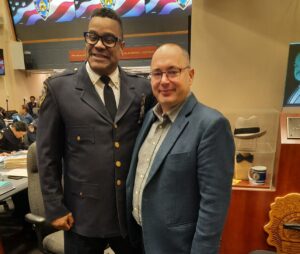
It was really the Broken Windows theory, let’s do this to make this happen. I would give Bratton more credit than Giuliani, even though Rudy co-signed off on quality-of-life enforcement and hard stuff. Those two just had a fight over whose credit it was.
We’re not locking up as many people now as we did then, but we’ve cleaned up most of the things. And whatever statistics and readings I’ve done that says that may not have been it, I am surely convinced that if it hadn’t been for locking up all these low-level offenders—many of them have warrants, most of them had issues—crime in the subway wouldn’t have been where it was.
In 1990, 17,500 transit crimes—reported. In 2017 it was only 2,500. And if you want to go into murders, there was an average of twenty murders in the subway per year in the early ’90s. We had one in 2018 and zero in 2017. Could it be a correlation? I think so.
Summary: Broken Windows alone did not save NYC or bring down crime. It is worthy to address disorder for its own sake, but that doesn’t impact crime on its own. As tool, Broken Windows gave police legal reason to stop many people, some of whom were very serious criminals already wanted for arrest and before they committed yet another serious crime. Stopping people legally, especially known offenders, for minor issues also deterred criminals from carrying illegal guns. These tactics did make the streets safer. But the devil is always in the details. Later in the 2000s with “stop question and frisk,” Broken Windows morphed into something else, Zero Tolerance, which set policing back for decades. But in the 1990s Broken Windows (combined with other tactics and strategies) was an essential tool in the department’s philosophical shift to policing focused on crime reduction. Under good leadership, Broken Windows can play a large role in changing police organizational focus and practice. Under bad leadership, it can cause harm. But under bad leadership, what doesn’t?